Current Situation & Pricing Overview 2026 in Croatia
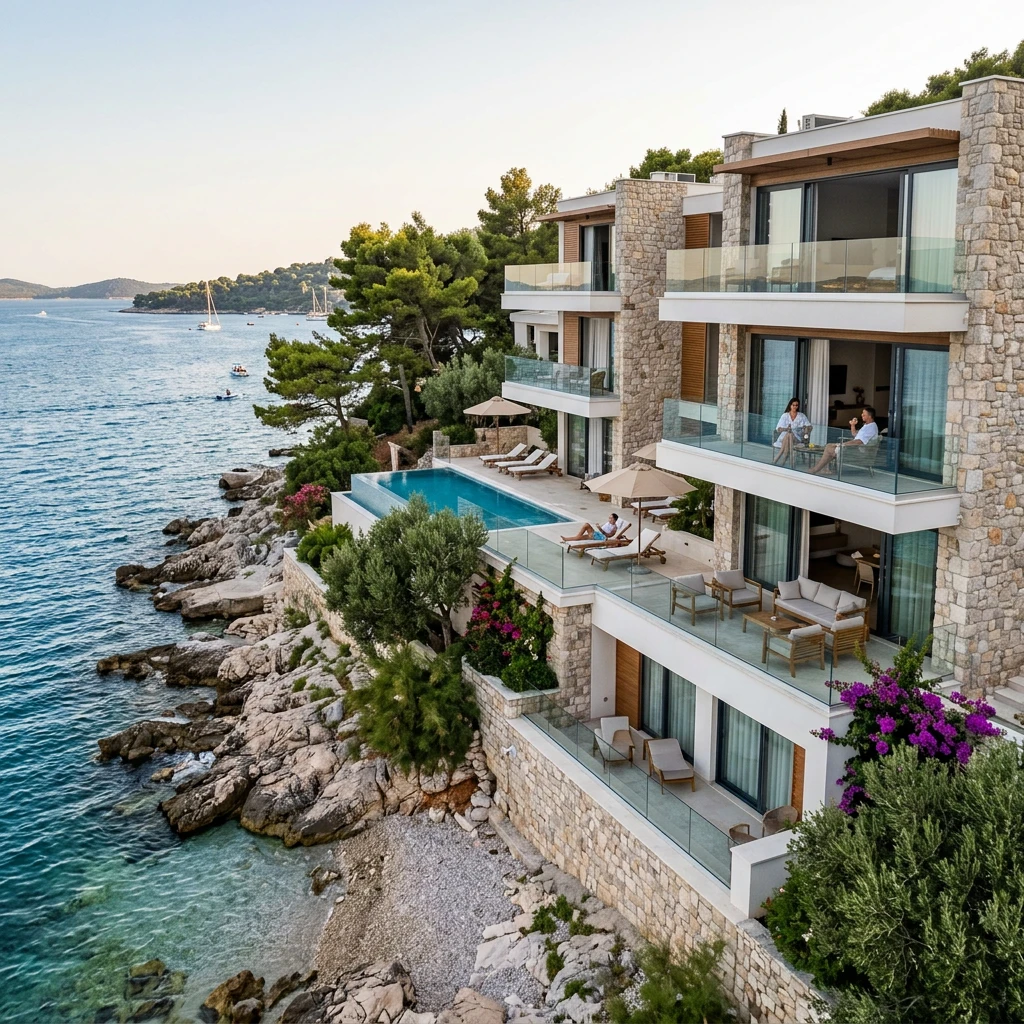
With the adoption of the Euro in Croatia, the vacation rental market has seen significant changes. Prices have adjusted due to inflation and increased demand from international tourists. As of 2026, visitors can expect a wide range of rental options, from budget-friendly studios to luxurious villas, particularly along the stunning Croatian coastline and islands.
- Informative estimated average prices in Euros (€)
- Transparent low vs. high peak season price breakdown below
Comprehensive Price Breakdown & Comparison Table 2026
| Service | Low Season | High Season |
|---|---|---|
| Studio Apartment | 50 € – 80 € | 90 € – 150 € |
| One-Bedroom Apartment | 70 € – 120 € | 130 € – 200 € |
| Two-Bedroom Apartment | 100 € – 180 € | 200 € – 300 € |
| Luxury Villa | 250 € – 400 € | 500 € – 800 € |
| Shared Accommodation (Hostel) | 15 € – 30 € | 20 € – 40 € |
| Camping (per pitch) | 20 € – 50 € | 30 € – 70 € |
Regional Price Variations (Islands vs Coastal vs Inland)
Prices vary significantly across different regions of Croatia. Coastal areas and islands, such as Hvar and Korčula, tend to be more expensive due to their popularity and proximity to the sea. In contrast, inland areas may offer more affordable options. Here’s a brief overview:
- Hvar Island: High demand leads to higher prices, especially in summer.
- Korčula Island: Similar to Hvar, but slightly more affordable.
- Dubrovnik: Known for its historical significance, expect premium rates.
- Split: A mix of budget and luxury options, with competitive pricing.
- Rovinj: Popular tourist destination with moderate to high prices.
- Inland Areas: Generally more budget-friendly, ideal for longer stays.
Insider Money-Saving Tips & Tourist Traps to Avoid
To make the most of your budget while enjoying Croatia, consider the following tips:
- Lunch Specials: Look for 'Marenda' deals at local restaurants for affordable meals.
- Grocery Shopping: Buy local produce and cook your meals to save money.
- Dynamic Currency Conversion: Avoid using this service at ATMs; it often comes with high fees.
- Tipping Etiquette: A small tip (10%) is appreciated but not mandatory.
- Book Early: Secure your rental in advance to lock in lower rates.
Payment Rules, Card Acceptance & Fiscal Receipts
In Croatia, it’s essential to understand the payment landscape:
- Card Acceptance: Most establishments accept major credit cards, but always carry some cash for smaller vendors.
- Fiscal Receipts: Request a 'Fiskalni račun' for all transactions; it’s a legal requirement and protects your rights as a consumer.
- Cash vs. Card: While cards are widely accepted, having cash on hand is advisable, especially in rural areas.